Systems Design: Beginner's guide to building scalable solutions
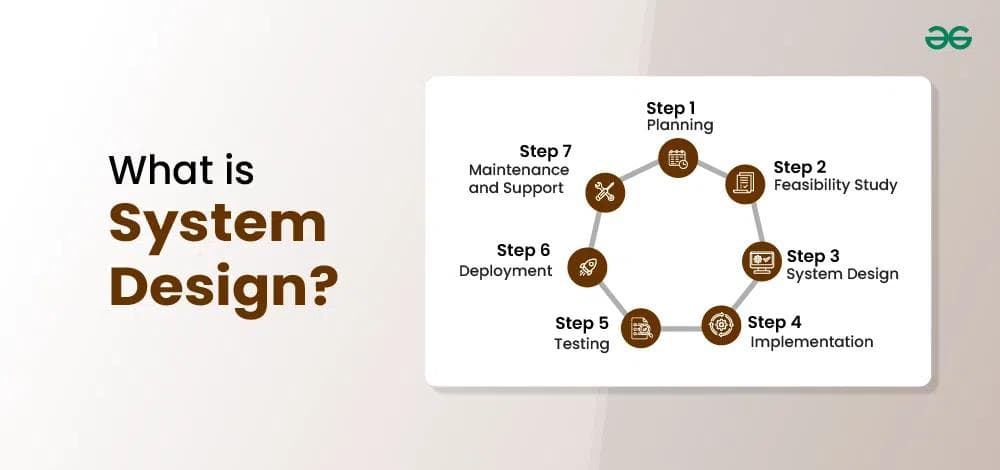

Systems design is at the heart of building scalable, efficient, and robust software architectures. Whether you’re a budding software engineer or a seasoned developer looking to brush up on fundamentals, understanding systems design is crucial for solving real-world problems.
In this guide, we’ll walk through the basics of systems design, explore key concepts, and provide practical examples to help you build and scale modern applications.
What Is Systems Design?
Systems design is the process of defining the architecture, components, modules, interfaces, and data for a system to satisfy specified requirements. It involves:
• High-Level Architecture: How different parts of the system interact.
• Component Design: Defining microservices, databases, caches, and load balancers.
• Scalability and Reliability: Techniques to handle increasing loads and ensure system availability.
• Trade-Off Analysis: Balancing latency, throughput, consistency, and cost.
Understanding these fundamentals helps engineers build systems that are not only functional but also maintainable and scalable.
Core Concepts of Systems Design
1. Scalability
Scalability is the ability of a system to handle increased load. There are two primary types:
• Vertical Scaling: Increasing the capacity of a single machine.
• Horizontal Scaling: Distributing the load across multiple machines or nodes.
2. Load Balancing
Load balancing distributes incoming network traffic across multiple servers. It prevents any single server from becoming a bottleneck, ensuring high availability and reliability.
3. Caching
Caching improves performance by storing frequently accessed data in a fast-access medium (like in-memory stores such as Redis or Memcached). Effective caching strategies can significantly reduce response times and reduce load on databases.
4. Data Storage and Consistency
Different applications have different requirements:
• Relational Databases: Best for structured data with strong consistency needs.
• NoSQL Databases: Offer high scalability and flexibility for unstructured data.
• Eventual Consistency: Some systems accept eventual consistency to achieve higher performance.
5. Microservices vs. Monoliths
Modern systems often adopt a microservices architecture where the system is divided into small, independent services. This contrasts with monolithic architectures where all components are tightly integrated. Each approach has its own trade-offs in terms of complexity, scalability, and deployment.
Practical Approach to Teaching Systems Design
Step 1: Start with Real-World Problems
Begin by presenting real-world scenarios:
• Designing an e-commerce platform.
• Building a ride-sharing app.
• Creating a social media feed.
Ask students to think about how to manage millions of users, handle data consistency, and provide fast responses.
Step 2: Introduce System Components
Break down a system into its core components:
• API Gateways: Manage client requests.
• Load Balancers: Distribute traffic.
• Databases and Caches: Store and quickly retrieve data.
• Message Queues: Handle asynchronous processing.
• Monitoring Tools: Ensure the system is healthy.
Step 3: Whiteboard Sessions
Encourage collaborative whiteboard sessions where teams design a system from scratch. This exercise helps in understanding trade-offs, communication between components, and scaling strategies.
Step 4: Use Case Studies
Review case studies of successful systems:
• How Netflix handles streaming and recommendations.
• How Amazon manages inventory and order processing.
• The evolution of systems architecture in companies like Google and Facebook.
Discuss how these systems address common challenges and trade-offs.
Step 5: Hands-On Projects
Assign projects that require:
• Building a basic microservices application.
• Implementing a load balancer using tools like Nginx.
• Creating a simple caching layer for performance improvement.
These projects solidify the theoretical concepts by putting them into practice.
Best Practices in Systems Design
• Keep It Simple: Start with a minimal viable design and iterate.
• Design for Failure: Assume that components will fail and design systems with redundancy.
• Prioritize Communication: Document system design clearly to align teams.
• Monitor and Optimize: Use real-time metrics to understand performance bottlenecks.
• Embrace Trade-Offs: Understand that improving one aspect may compromise another; balance based on priorities.
Conclusion
Mastering systems design is an essential skill for any developer aiming to build scalable and resilient systems. By understanding key principles like scalability, load balancing, caching, and data consistency, you can design systems that meet the demands of modern applications. Teaching these concepts through real-world examples, collaborative sessions, and hands-on projects helps bridge the gap between theory and practice.
As you continue your learning journey, remember that systems design is as much about creative problem-solving as it is about technical know-how. Embrace iterative learning, keep experimenting, and always be ready to adapt to new challenges.
